
Shop Now
From Our Blog
-
Weldclass backs Ashton Cattach at the 2026 Bathurst 1000
Weldclass backs Melbourne welder and racer Ashton Cattach in the GR Cup at the 2026 Bathurst 1000. Session times and how to watch on Fox Sports and Kayo. -
FURY MPST Series: How-To Videos
Video guides for Weldclass FURY MPST Series MIG/TIG/Stick Pulse welding machines.

Maintenance Schedule for On-Torch Welding Fume Extractors
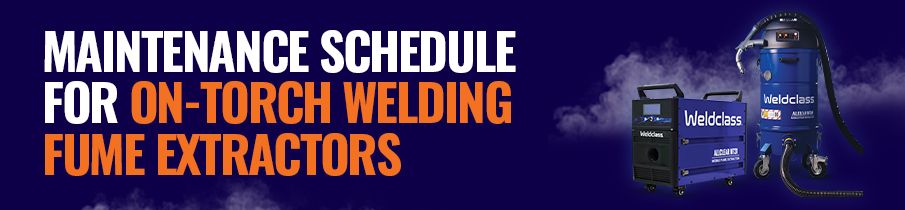
This article outlines a recommended maintenance procedure for Weldclass ALLCLEAR® On-Torch and Portable fume extractors. Although designed for the listed Weldclass models, many of these steps outline general best-practice that is applicable to other brands.
Download This Page as PDF ALLCLEAR Fume Extractor Range Get a Quote | Request a Demo
Fume Extractor Models
The information in this article applies to the following Weldclass ALLCLEAR® models:
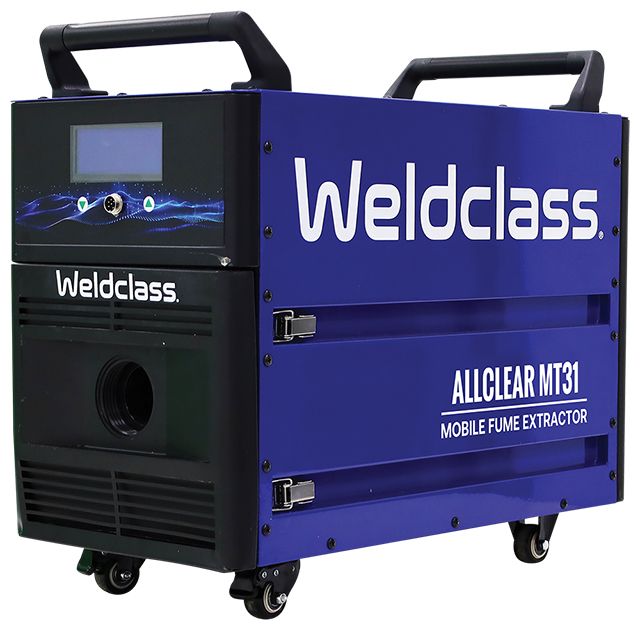
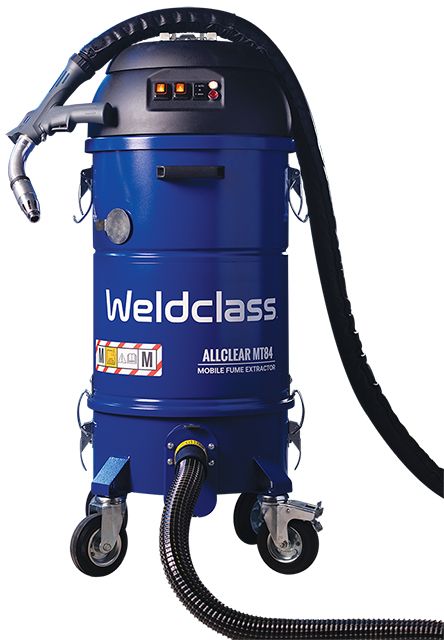
Maintenance Schedule
|
Frequency |
Action / Component |
Details |
|
Daily |
Visual Inspection |
Check for any visible damage or wear. |
| Filter Check | Inspect filter* If visibly clogged, clean and/or replace. Replace if damaged. Follow processes below. | |
| Function Check | Turn unit on and check for normal operation & airflow at hose or nozzle intake, and exhaust outlet. Test emergency stop. |
|
| Check Dust Collection Tray Level |
Open dust collection tray or bin, empty if tray is filled to >25% of capacity. Follow processes below. |
|
| Torch Check |
Check torch/gun for any visible signs of damage, wear, or airflow obstruction. Replace torch consumables if worn or affected by spatter build up. |
|
| Weekly | Power Supply | Check power supply cable and connections for signs of wear or damage. Ensure plugs and connections are secure & tight. |
| Clean Exterior | Thoroughly clean all external components and surfaces with suitable brush and/or cloth/rag. | |
| Empty Dust Collection Tray | Empty tray / bin, following process below. | |
| Inspect Hoses, Torch, etc | Check all hoses and fittings (including torch hose) for signs of damage, cracks, air leaks, etc. Replace parts as required | |
|
Annual |
Replace Filter | Replace filter* as process below, if this has not occurred within the last 12 months. |
| Power Supply | Follow WorkSafe and your employer's guidelines for applicable testing and tagging of input power cable and plug. | |
| Update Records | Ensure maintenance tasks are / have been logged. Review records to ensure compliance with this schedule. |
*Including any prefilters or spark filters if applicable to your unit.
Inspection, Cleaning, and Replacement Procedure
Follow these guidelines when inspecting, cleaning, or replacing a filter. Also consult and follow the instruction manual for your ALLCLEAR welding fume extractor.
Safety First: Before You Start
- Always disconnect the unit from mains power supply before starting any filter maintenance
- Conduct only in well-ventilated environments
- Ensure the unit and cleaning area is well shielded from any wind or strong airflow, so that dust is not disturbed
- Should be conducted by authorised and trained personnel only
- Operators must wear appropriate respiratory protection conforming to AS/NZS 1716 class P2 or P3, hand/body protection, and eye protection
- Ensure that other personnel stand well away from, and do not make contact with the unit, filter, and extracted matter
- When disposing of dust and/or filters, follow local regulations for disposal of contaminated materials.
Filter Inspection
- Follow safety instructions above and all applicable instructions in instruction manual
- Open unit and remove filter (refer to instruction manual)
- Check filter for signs of filter clogging, damaged filter medium / material, tears and punctures, etc
- Clean or replace filter if required (see instructions below)
- Re-install the filter (refer to instruction manual)
- Reconnect unit to power supply
Filter Cleaning
- Follow safety instructions above and all applicable instructions in instruction manual
- Prepare suitable containment bag, such as heavy-duty disposable non-porous plastic bag
- Open unit, remove filter and place filter in containment bag, avoid any excess movement or agitation of filter whilst place in bag
- Keep filter in containment bag during cleaning, hold mouth of bag closed to minimise escaping dust/debris. Generally it is best to clean filter outdoors to avoid any escaping dust re-entering the workplace.
- Using a suitable compressed air gun, direct the air evenly from the inside of the cartridge filter towards the outside. Do not push the air gun directly into/against the filter, this may damage it.
- Apply the air for 5–10 minutes, covering the whole filter surface as evenly / thoroughly as possible.
- Re-install the filter (refer to instruction manual)
- Reconnect unit to power supply
Filter Replacement
- Filter should be replaced if any part of the filter is damaged, if there is a puncture or tear in the filter medium/material, if/when filter becomes clogged and cleaning is no longer effective, if full filter indicator continues to display even after cleaning, if filter has not been replaced in the last 12 months.
- Follow safety instructions above and all applicable instructions in instruction manual
- Before replacing the main cartridge filter, prepare the appropriate container (such as heavy-duty PE-bag or plastic bag) for disposal.
- Open unit and remove filter (refer to instruction manual)
- Place the filter in disposal bag / container. Seal the mouth of the bag with a cable tie or similar.
- Install new filter and ensure new filter is properly seated (refer to instruction manual)
Emptying Dust Collection Tray or Bin
- Follow safety instructions above
- Open unit to access dust collection tray/bin (see instruction manual)
- Empty tray/bin into heavy-duty non-porous disposable bag (such as PE bag) and seal bag permenantly with cable tie or similiar, then dispose of bag
- Re-assemble unit and connect to mains power supply
Spare Parts
Replacement filter and spare parts for ALLCLEAR units
Related Articles
Maintenance Schedule for Mobile Welding Fume Extractors (LEVs)
Does Your Welding Fume Extractor REALLY Suck
Do mobile welding fume extractors work?
Complete Guide to PAPR Welding Helmets
While all care has been taken to ensure the information presented is accurate, Weldclass accepts no responsibility for any errors or omissions in this article. The information given is of a general nature only and does not take into account the specific circumstances of any individual application or situation, and should not be used as a substitute for professional advice. All applicable safety standards (including Australian standards), industry guidelines and regulations should be consulted and followed. E.&O.E.